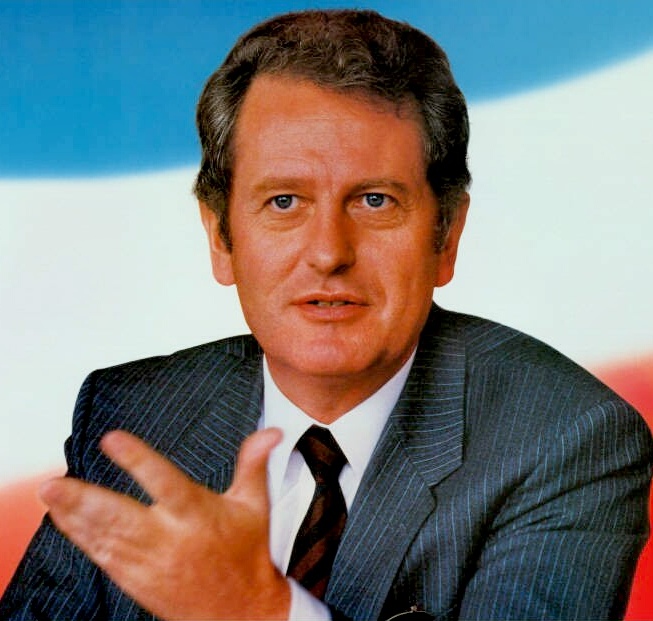
Decoding the Barschel Affair: Scandal, Conspiracies, and a Tragic End
Few political scandals in post-war German history captivate the public imagination quite like the Barschel Affair. What began as a local political skirmish in Schleswig-Holstein rapidly escalated into an international mystery involving allegations of espionage, deep-seated conspiracies, and a politician's untimely death. The unresolved questions surrounding Uwe Barschel's demise have fuelled decades of speculation, making it a perennial subject of fascination, particularly for those interested in Die Barschel Affäre Film adaptations that seek to unravel this complex narrative. This article delves into the heart of the scandal, exploring the political downfall, the puzzling death, and the persistent shadows of conspiracy that continue to shroud the truth.
The Political Storm: A Fall from Grace
The year 1987 was meant to be a triumph for Uwe Barschel, the charismatic Minister-President of Schleswig-Holstein and a rising star in Germany's conservative CDU party. After a close call with a plane crash, which he survived with injuries, Barschel was unexpectedly losing ground in a fiercely contested state election campaign. The political atmosphere was already charged when, just before the polls opened, a bombshell report dropped. A prominent news magazine accused Barschel of orchestrating a sophisticated smear campaign against his popular SPD rival, Björn Engholm. The allegations claimed Barschel had utilized a questionable media advisor, Reiner Pfeiffer, to spy on Engholm and disseminate damaging, untrue information.
In a desperate attempt to salvage his reputation and career, Barschel publicly and vehemently denied all accusations, famously pledging his "Ehrenwort" – his word of honour. This solemn vow, a powerful declaration in German culture, was meant to settle the matter. However, the truth began to unravel rapidly. Tenacious reporters, notably David Burgen and Olaf Nissen, dug deeper, uncovering compelling evidence that directly contradicted Barschel's public statement. The discovery of this lie was fatal to his political standing. Faced with irrefutable proof of deceit, Barschel was forced to resign from his office. For many, his political career seemed to have ended in disgrace, a stark example of a promising trajectory cut short by scandal and dishonesty.
The Tragic Discovery: A Death in Geneva
The immediate aftermath of Barschel's resignation was a period of intense media scrutiny and public shock. Yet, the story was far from over. Just eleven days after his resignation, the affair took a profoundly dark and perplexing turn that would forever embed it in the annals of unsolved mysteries. On October 11, 1987, Uwe Barschel was found dead in the bathtub of Room 317 at the luxurious Beau-Rivage Hotel in Geneva, Switzerland. He was fully clothed.
The initial findings by Swiss investigators pointed towards suicide, suggesting a politician overwhelmed by shame and scandal had taken his own life. However, this conclusion was immediately and vehemently disputed by Barschel's family. They asserted, with unwavering conviction, that Uwe Barschel had been murdered. The scene itself, the circumstances of his death, and the rapid closure by official channels fueled widespread suspicion. How could a man who had fought so hard politically, even after a plane crash, suddenly succumb in such a manner? This single event transformed a German political scandal into an international whodunit, sparking debates that continue to this day: was it a desperate act of a disgraced man, or was Barschel silenced to prevent him from revealing a far greater truth? This question is at the very core of why Die Barschel Affäre Film adaptations resonate so deeply with audiences, offering different perspectives on this enduring enigma.
Unraveling the Web: Conspiracies and Deep State Connections
The theory of murder, championed by Barschel's family and a cadre of persistent investigators and journalists, opened a Pandora's Box of international intrigue. What began as a domestic smear campaign quickly ballooned into a conspiracy theory of gargantuan proportions, hinting at connections far beyond the borders of Schleswig-Holstein. As dedicated individuals, like the fictionalized reporter David Burger in various cinematic portrayals, pursued new leads, the case grew "monstrous" in its complexity.
Among the most frequently cited and chilling connections are:
- Illegal Arms Deals via East Germany (DDR): Speculation arose that Barschel was involved in covert arms transactions, possibly funneling weapons through the former German Democratic Republic. Such deals would have been highly illegal and politically explosive, potentially linking him to shadowy networks of international arms dealers.
- The Submarine Deal with South Africa: Another major thread connected Barschel to controversial negotiations involving German submarine sales to apartheid-era South Africa. This deeply sensitive and ethically fraught deal could have involved illicit financial flows and powerful international players, making it a motive for silencing anyone with critical knowledge.
- The Iran-Contra Affair: Perhaps the most far-reaching theory linked Barschel to the notorious Iran-Contra affair, a complex scandal in the United States involving illegal arms sales to Iran in exchange for the release of American hostages and the funding of Nicaraguan Contras. If Barschel possessed knowledge or played a role in the European aspects of this affair, his death could be seen as an act to prevent exposure of high-level international secrets.
These speculative connections paint a picture of a politician who might have been entangled in a web of clandestine operations, far removed from the public image of a state leader. The sheer scale and international nature of these alleged conspiracies have fuelled the belief that Barschel's death was not a suicide but a professional assassination, designed to protect powerful interests and keep critical information buried. This intricate tapestry of potential motives and powerful, shadowy figures is precisely what makes the Barschel Affair so compelling for filmmakers, allowing them to explore themes of betrayal, power, and hidden truths.
The Reporter's Quest: An Obsession with Truth
At the heart of many investigations into the Barschel Affair, and indeed central to cinematic narratives like Die Barschel Affäre Film, is the figure of the relentless reporter. David Burger, as portrayed in fiction, embodies the journalistic obsession to uncover the truth, regardless of the personal cost. His journey is often depicted as a descent into a labyrinthine world where trust is a luxury and danger lurks at every turn.
Burger’s quest begins with the initial political lie, but Barschel's death catapults him into a years-long pursuit of justice. He becomes consumed, following every lead, no matter how obscure or perilous. This dedication often comes at a steep price: losing touch with former friends and family, his life narrowing to the pursuit of this single, all-encompassing mystery. He finds himself navigating a murky landscape populated by enigmatic, often unreliable informants, where distinguishing fact from fabrication becomes a constant challenge. The lines between allies and enemies blur, fostering an environment where he "can no longer trust anyone." His personal life, exemplified by a developing affair with a photographer named Giselle, often takes a backseat to the all-consuming nature of his investigation.
This portrayal highlights the immense pressure and psychological toll of investigative journalism, especially when confronting what might be a deep-seated conspiracy. It underscores the courage, resilience, and often isolation experienced by those who dare to challenge official narratives and dig for uncomfortable truths. The appeal of such a character for film is evident: a lone wolf battling against overwhelming odds, a classic hero's journey set against a backdrop of real-world political intrigue. It’s a powerful narrative about the search for truth in a world rife with deception.
Beyond the Headlines: Why the Barschel Affair Endures
The Barschel Affair, despite decades of investigations, documentaries, and numerous theories, remains officially unresolved. The fundamental question – murder or suicide – hangs heavy over German history, symbolizing a potential failure of justice and the enduring power of political secrets. This lack of definitive closure is precisely what grants the affair its enduring power and allure, keeping it alive in public consciousness and making it a compelling subject for Die Barschel Affäre Film and other media.
Practical Implications for Understanding Complex Events:
- Critical Media Literacy: The Barschel Affair serves as a powerful reminder to approach news and official statements with a critical eye. Multiple sources and independent investigations are crucial for piecing together complex narratives.
- The Lure of Conspiracy: While some theories might seem far-fetched, cases like Barschel’s highlight how real-world conspiracies can exist, often in the shadows of power, making it difficult to dismiss all such speculation outright.
- The Role of Journalism: The affair underscores the vital, albeit often dangerous, role of investigative journalism in a democratic society, acting as a check on power and a voice for accountability.
The very ambiguity of the Barschel Affair is its strength as a narrative. It allows for multiple interpretations, fuels passionate debate, and challenges our understanding of truth, power, and morality. It is a stark reminder that sometimes, even with extensive resources and fervent public interest, some questions remain unanswered, leaving behind a legacy of suspicion and unresolved tragedy.
The Barschel Affair transcends a mere historical footnote; it is a permanent fixture in Germany's collective memory, a symbol of political scandal turned international mystery. From the initial allegations of a smear campaign to the shocking discovery in a Geneva hotel, and the subsequent swirl of deep state conspiracies, the case continues to resonate. It offers a chilling glimpse into the potential dark underbelly of power and the unwavering pursuit of truth by those brave enough to question official narratives. For filmmakers, writers, and historians alike, Barschel's story remains a rich, albeit disturbing, tapestry of human ambition, betrayal, and an unresolved death that continues to haunt the imagination, leaving audiences to ponder what truly happened in Room 317.